
The Universe Counts

Where is Halley's Comet now?

5,237,324,233

kilometres · Halley's Comet's distance from the Sun

Right now Halley's Comet is 5.2 billion kilometres from the Sun, beyond the orbit of Neptune. It passed the farthest point of its orbit on 8 December 2023 and is now falling back towards the Sun. It will be closest to the Sun again on 28 July 2061, when it should once more be visible from Earth.

Time until Halley's Comet is next closest to the Sun
12685d 00h 52m 15s
Measured, with error
Time since Halley's Comet passed its farthest point from the Sun
2y 331d 8h
Measured
Time since Halley's Comet was last closest to the Sun
40y 268d 4h
Measured
Time Halley's Comet takes to go once around the Sun
76 years
Measured, with error

What Halley's Comet is

A ball of ice on a long loop

A comet is a lump of ice, dust and rock. Far from the Sun it is dark and quiet. When it comes close, sunlight warms it, and gas and dust stream off to make a glowing head and a long tail.

Halley's Comet is the most famous one. It goes round the Sun about every 76 years, so most people get one chance to see it. Its orbit is a long, thin oval, and it runs the opposite way round from the planets. At its closest it comes inside the orbit of Venus. At its farthest it is 35.14 AU from the Sun, about 1.2 times as far out as Neptune.

76 yearsTime Halley's Comet takes to go once around the Sun
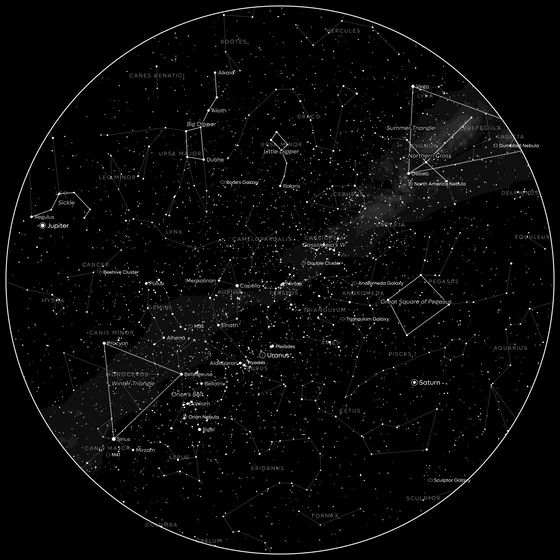
Where it is now

Falling back towards us

For decades after its 1986 visit, Halley climbed slowly away from the Sun. On 8 December 2023 it stopped climbing. That was its farthest point, 1,062 days ago. Since then it has been falling back in.

Out there it moves slowly, less than half a kilometre per second towards the Sun. It speeds up the closer it gets. It will spend most of the coming decades far from us, then rush through the inner Solar System in a few months.

It is far too faint to see now. Where it is today comes from its orbit, worked out by JPL from thousands of observations made between 1835 and 1994.

2y 331d 8hTime since Halley's Comet passed its farthest point from the Sun

9 February 1986

The 1986 visit and Giotto

Halley was last closest to the Sun on 9 February 1986. Its nearest approach to Earth came later, on the way out, and it was not one of its brighter visits.

Space made up for it. A fleet of five spacecraft from Europe, the Soviet Union and Japan flew out to meet it. On 14 March 1986 the European probe Giotto passed within 596 kilometres of the nucleus. It became one of the first spacecraft to photograph the nucleus of a comet, the solid heart hidden inside the glowing head. Dust hit the probe thousands of times, and one grain sent it spinning for a while. It survived.

596 kmGiotto's closest distance from Halley's nucleus

From the Bayeux Tapestry to Edmond Halley

Seen for more than two thousand years

People have written about this comet for more than two thousand years. In 1066 it blazed in the sky before the Battle of Hastings, and it was stitched into the Bayeux Tapestry as an omen.

For most of history nobody knew these were all the same comet. Then, in 1705, the English astronomer Edmond Halley used Isaac Newton's new laws of gravity to work out comet orbits. He saw that several comets seen in earlier centuries moved the same way, and predicted it would return in 1758. It did, after he had died. It has carried his name ever since.

Twice a year

The meteors it leaves behind

Each time Halley passes the Sun, it sheds dust along its orbit. Earth crosses that trail twice a year. The tiny grains burn up high in our air as shooting stars.

In May we get the Eta Aquariids, and in October the Orionids. NASA calls both weak showers. So even now, with Halley far beyond Neptune, a little of it falls into our sky every year. See our meteor showers page for the next one.

The return in 2061

What a person born today will see

Halley will be closest to the Sun on 28 July 2061, in 12,685 days. A child born this year will be in their thirties. JPL's orbit is based on observations up to 1994, so the exact hour may shift, but the year is secure.

A lifetime is about 73.3 years on average, and Halley takes about 76 to come round. So most people see it once, if the sky is kind. A few lucky people see it twice, once as a child and once when old. Whoever sees it in 2061 will be looking at the same comet people watched in 1066.

12685d 00h 52m 15sTime until Halley's Comet is next closest to the Sun

The comet that frightened people at Hastings is on its way back now. Where do you hope to be when it arrives?

Questions people ask

Where is Halley's Comet right now?

It is 5.2 billion kilometres from the Sun, out beyond Neptune's orbit, and slowly falling back towards the Sun. It passed its farthest point on 8 December 2023.

When will Halley's Comet return?

It will be closest to the Sun on 28 July 2061. It should be visible from Earth around then.

Will Halley's Comet ever be visible again?

Yes, in 2061, on its regular trip round the Sun. For now it is far too faint to see.

When was Halley's Comet last seen?

In 1986, when it was closest to the Sun on 9 February. Giotto flew past it on 14 March 1986.

How often does Halley's Comet come back?

About every 76 years. The gap has been between between 74 and 79 years, because the planets, mainly Jupiter, tug on it.

How do we know?

Every number on this page has a source

Show the 9 numbers and their sources
FactValueCertaintySourceAs of
Giotto's closest distance from Halley's nucleus596 kmMeasured, with errorESA
14 Mar 1986
Halley's Comet's distance from the Sun5,237,324,233 kmMeasuredNASA JPL
4 Nov 2026
Halley's Comet's distance from the Sun at its farthest point in 202335.14 AUMeasuredNASA JPL
8 Dec 2023
Neptune's average distance from the Sun30.0690 AUMeasuredNASA NSSDCA
1 Jan 2000
Time Halley's Comet takes to go once around the Sun76 yearsMeasured, with errorNASA
NASA JPL
4 Nov 2026
Time since Halley's Comet passed its farthest point from the Sun2y 331d 8hMeasuredNASA JPL
8 Dec 2023
Time since Halley's Comet was last closest to the Sun40y 268d 4hMeasuredNASA JPL
9 Feb 1986
Time until Halley's Comet is next closest to the Sun12685d 00h 52m 15sMeasured, with errorNASA JPL
NASA
4 Nov 2026
World average life expectancy at birth in 202473.3 yearsMeasured, with errorUnited Nations, Department of Economic and Social Affairs, Population Division
27 Oct 2026