
The Universe Counts

Where is Pioneer 10 now?

21,285,945,914

kilometres · Pioneer 10's modelled distance from the Sun

Pioneer 10 is a NASA spacecraft, now silent, still coasting on a path that can be modelled. At 00:00 UTC on 11 November 2026, a JPL Horizons ephemeris placed it 21,274,119,815 kilometres from the Sun. That figure is a modelled historical trajectory, not live telemetry, and it is not contact. NASA last detected a signal on 23 January 2003, and last received telemetry on 27 April 2002. A final attempt to reach it, in March 2006, failed. Voyager 1, which overtook it in 1998, is farther out.

Right now

Pioneer 10's modelled distance from the Sun
21,285,945,914 km
Measured
Pioneer 10's modelled distance from Earth
21,148,803,570 km
Measured
Time since Pioneer 10’s last detected signal
23y 303d 19h
Measured
Time since Pioneer 10 last returned telemetry
24y 209d 13h
Measured
Voyager 1's distance from Earth
25,910,875,752 km
Measured
Live · as of 22 Nov 2026

A 21-month mission that ran for decades

The first through the belt, and past Jupiter

Pioneer 10 was NASA's first mission to the outer planets. It left Earth on 3 March 1972 at 01:49 UTC. NASA's key dates list the launch as 2 March 1972; US Eastern time. It entered the asteroid belt on 15 July 1972, the first spacecraft to do so, and made its closest approach to Jupiter on 4 December 1973, the first craft past that planet.

Pioneers 10 and 11 both carried small metal plaques identifying their time and place of origin, in case anyone found them much later. That is a greeting, not evidence that anyone has.

52y 353d 13hTime since Pioneer 10's closest approach to Jupiter
A historical trajectory, not a phone call

Where it is now, modelled

The number above is the modelled distance from the Sun, counted forward from the Horizons range for target `-23`. At 00:00 UTC on 11 November 2026 that range was 21,274,119,815 kilometres. At the same instant, the geometric distance from Earth was 21,148,803,570 kilometres. Earth's orbit makes the Earth figure wobble, even while the Sun figure keeps growing; on that day the Earth range was even falling slightly as Earth moved in its orbit.

This is not live ranging. Horizons builds the path from JPL navigation trajectory files last revised on 27 July 2005. Horizons itself says the trajectory is suitable for general historical purposes, but should be used cautiously for high-precision or tracking work, because Pioneer-era models do not match today's solutions. A modelled position is not a signal, and it is not proof that anyone can still hear the spacecraft.

Telemetry, then a last faint signal, then silence

When it last called home

NASA distinguishes three endings, and they are not the same date. The last telemetry — useful data from the spacecraft's systems — arrived on 27 April 2002. The last detected signal reached Earth on 23 January 2003. That last signal, NASA says, came from 12,230,000,000 kilometres from Earth and took 11h 20m 00s to arrive. Those are 2003 figures. They are not a current range.

DSN did not detect a signal on 7 February 2003, and the previous three contacts, including the January signal, were very faint, with no telemetry. A final attempt to contact Pioneer 10 failed in March 2006: NASA's mission page gives 4 March 2006; the 23 March 2003 story, later updated, gives 3–5 March 2006. This page does not invent a third date. Routine contact had already ended on 31 March 1997. Horizons still says the last fully successful acquisition of signal was 3 March 2002; that is Horizons' older wording, not NASA's last-signal date.

23y 303d 19hTime since Pioneer 10’s last detected signal

Jupiter, then Saturn, then silence

Pioneer 11, the sister craft

Pioneer 11 is not given its own page here. It is the sister ship: launched on 6 April 1973, past Jupiter on 3 December 1974, and the first to fly by Saturn, on 1 September 1979. NASA Ames made last contact on 30 September 1995. Scientists received last engineering data on 24 November 1995. Horizons says science operations and daily telemetry ceased on 30 September 1995, when there was no longer enough power for the experiments.

Its path can be modelled too, from a trajectory revised on 15 June 2007, with the same historical-quality caution as Pioneer 10. At 00:00 UTC on 11 November 2026, Horizons placed it 17,684,493,837 kilometres from the Sun, and 17,764,332,784 kilometres from Earth. NASA says it will pass near the star Lambda Aquila in almost 4,000,000 years. That, like Pioneer 10's heading, is a present direction, not a rendezvous.

17,695,555,835 kmPioneer 11's modelled distance from the Sun

Voyager 1 overtook it; New Horizons has not

Who went farther, and the heading

Voyager 1 became the most distant human-made object after overtaking Pioneer 10 on 17 February 1998. It is still farther today. This page does not retell Voyager 1's story; that craft has its own page. New Horizons is also on its way out, and is linked here, but a common-epoch Horizons ranking on 11 November 2026 does not show it overtaking Pioneer 10. The ranking of the five carries that comparison, with every frame labelled.

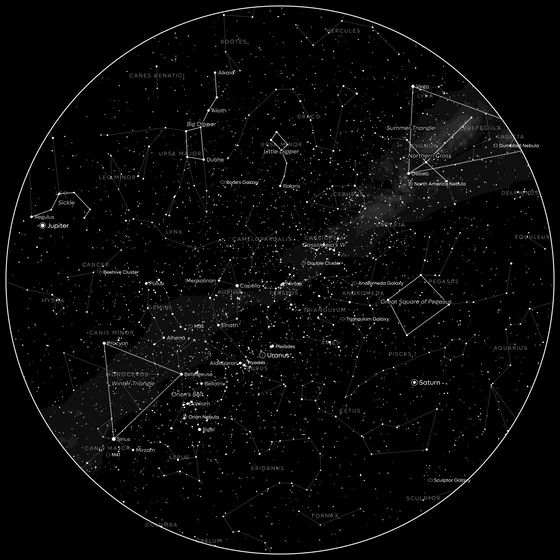
NASA says Pioneer 10 is generally heading in the direction of the red star Aldebaran, the eye of Taurus, and is expected to pass by it in 2,000,000 years. NASA's last-signal story gives Aldebaran as about 68 light-years away; the distance used on this site is 66.6 light-years. That is the star's present direction and distance, not a meeting with the star as it will be then.

The apparent sunward acceleration once called the Pioneer anomaly was accounted for by thermal recoil from heat of the spacecraft's own power source. Turyshev and colleagues, using the flight telemetry, found that once that recoil force is properly accounted for, no anomalous acceleration remains. That is wonder that rides on evidence, not an unsolved mystery.

66.6 lyDistance to Aldebaran

A quiet machine is still going, long after the last faint hiss arrived. If a plaque like that were leaving today, what would you write on it?

Questions people ask

Where is Pioneer 10 now?

On a modelled path out of the solar system. At 00:00 UTC on 11 November 2026, Horizons placed it 21,274,119,815 kilometres from the Sun and 21,148,803,570 kilometres from Earth. That is a historical trajectory, not live telemetry.

Can NASA still communicate with Pioneer 10?

No. The last detected signal was on 23 January 2003. The last telemetry was on 27 April 2002. A final attempt in March 2006 failed.

Is Pioneer 10 farther than Voyager 1?

No. Voyager 1 overtook it on 17 February 1998, and is still the farthest spacecraft from Earth. See the Voyager 1 page.

Has New Horizons overtaken Pioneer 10?

Not in the official ephemerides compared at 00:00 UTC on 11 November 2026. Pioneer 10 was still farther from both Earth and the Sun than New Horizons at that epoch. The inbox suggestion that New Horizons had already overtaken it was checked, and not used.

How far was Pioneer 10 when it last called home?

NASA says the last signal, on 23 January 2003, came from 12,230,000,000 kilometres from Earth and took 11h 20m 00s to arrive. That is a 2003 Earth distance, not a current one.

What is Pioneer 10 doing now?

It is silent, coasting. The path can still be modelled. It is generally heading toward Aldebaran as that star stands now, in 2,000,000 years, not to a rendezvous.

How do we know?

Every number on this page has a source

Show the 26 numbers and their sources
FactValueCertaintySourceAs of
Distance to Aldebaran66.6 lyMeasured, with errorCDS / SIMBAD
Astronomy & Astrophysics
2 Apr 1991
Light time of Pioneer 10’s last detected signal11h 20m 00sMeasuredNASA
23 Jan 2003
New Horizons' distance from the Sun9,891,936,032 kmMeasuredNASA JPL
NASA JPL
NASA JPL
22 Nov 2026
Pioneer 10's distance from Earth at the last detected signal12,230,000,000 kmMeasuredNASA
23 Jan 2003
Pioneer 10's modelled distance from Earth21,148,803,570 kmMeasuredNASA JPL
NASA JPL
11 Nov 2026
Pioneer 10's modelled distance from the Sun21,285,945,915 kmMeasuredNASA JPL
NASA JPL
NASA JPL
11 Nov 2026
Pioneer 10's modelled distance from the Sun at 00:00 UTC on 11 November 202621,274,119,815 kmMeasuredNASA JPL
NASA JPL
11 Nov 2026
Pioneer 11's modelled distance from Earth17,764,332,784 kmMeasuredNASA JPL
11 Nov 2026
Pioneer 11's modelled distance from the Sun17,695,555,835 kmMeasuredNASA JPL
NASA JPL
NASA JPL
11 Nov 2026
Pioneer 11's modelled distance from the Sun at 00:00 UTC on 11 November 202617,684,493,837 kmMeasuredNASA JPL
NASA JPL
11 Nov 2026
Time NASA gives for Pioneer 10 to pass by Aldebaran2,000,000 yearsEstimatedNASA
NASA
11 Nov 2026
Time NASA gives for Pioneer 11 to pass near Lambda Aquila4,000,000 yearsEstimatedNASA
11 Nov 2026
Time since last engineering data from Pioneer 1130y 364d 1hMeasuredNASA
24 Nov 1995
Time since NASA Ames last contacted Pioneer 1131y 53d 19hMeasuredNASA
30 Sep 1995
Time since Pioneer 10 entered the asteroid belt54y 130d 1hMeasuredNASA
15 Jul 1972
Time since Pioneer 10 last returned telemetry24y 209d 13hMeasuredNASA
NASA
27 Apr 2002
Time since Pioneer 10's closest approach to Jupiter52y 353d 13hMeasuredNASA
4 Dec 1973
Time since Pioneer 10’s last detected signal23y 303d 19hMeasuredNASA
NASA
23 Jan 2003
Time since Pioneer 10's launch54y 264d 0hMeasuredNASA JPL
NASA
3 Mar 1972
Time since Pioneer 11's Jupiter flyby51y 354d 19hMeasuredNASA
3 Dec 1974
Time since Pioneer 11's launch53y 230d 5hMeasuredNASA JPL
NASA
6 Apr 1973
Time since Pioneer 11's Saturn flyby47y 82d 19hMeasuredNASA
1 Sep 1979
Time since Voyager 1 overtook Pioneer 1028y 278d 13hMeasuredNASA
NASA
17 Feb 1998
Voyager 1's distance from Earth25,910,875,753 kmMeasuredNASA JPL
NASA JPL
22 Nov 2026
Voyager 1's distance from the Sun25,795,121,181 kmMeasuredNASA JPL
22 Nov 2026
Voyager 2's distance from the Sun21,623,244,672 kmMeasuredNASA JPL
NASA JPL
NASA JPL
22 Nov 2026