
The Universe Counts

Your stars

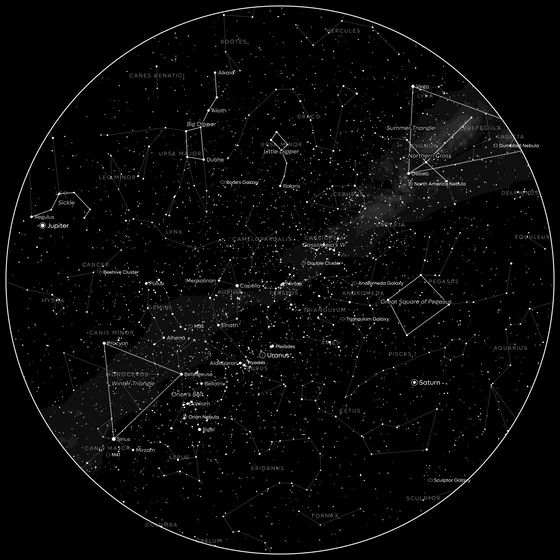
A star's distance in light-years is the age of its light. So a star 36 light-years away is showing us, tonight, the light it sent 36 years ago. Give the day you were born, and this page lists 42 bright stars in the order their light from that day reaches Earth, the next one with its date, and how far the light Earth sent out that day has gone. Your birthday stays in your browser.

Shown for someone born on 9 June 1990.

The next light as old as someone born that day

Arcturus

The light it sent on 9 June 1990 reaches Earth around February 2027, give or take 3 months, when they are 36. It is 36.7 light-years away, in Boötes.

The last to arrive was Denebola, around April 2026. Since then, the light anyone sees from it left it after that day.

In the order their light catches up with that life

Light from 16 of these 42 stars, sent that day, has reached Earth.

  1. age 4Alpha CentauriArrived 11 October 1994, give or take 10 days. 4.3 light-years away in Centaurus, best seen from the south.
  2. age 8SiriusArrived 14 January 1999, give or take 13 days. 8.6 light-years away in Canis Major, seen from both hemispheres.
  3. age 10Epsilon EridaniArrived 8 December 2000, give or take 2 days. 10.5 light-years away in Eridanus, seen from both hemispheres.
  4. age 11ProcyonArrived 8 December 2001, give or take 18 days. 11.5 light-years away in Canis Minor, seen from both hemispheres.
  5. age 11Tau CetiArrived 7 May 2002, give or take 4 days. 11.9 light-years away in Cetus, seen from both hemispheres.
  6. age 16KeidArrived 11 October 2006, give or take 4 days. 16.3 light-years away in Eridanus, seen from both hemispheres.
  7. age 16AltairArrived 20 February 2007, give or take 18 days. 16.7 light-years away in Aquila, seen from both hemispheres.
  8. age 19AchirdArrived 4 October 2009, give or take 7 days. 19.3 light-years away in Cassiopeia, best seen from the north.
  9. age 19Delta PavonisArrived 30 April 2010, give or take 5 days. 19.9 light-years away in Pavo, best seen from the south.
  10. age 24Beta HydriArrived 8 October 2014, give or take 7 days. 24.3 light-years away in Hydrus, best seen from the south.
  11. age 25VegaArrived 9 June 2015, give or take 24 days. 25.0 light-years away in Lyra, seen from both hemispheres.
  12. age 25FomalhautArrived July 2015, give or take a month. 25.1 light-years away in Piscis Austrinus, seen from both hemispheres.
  13. age 26TabitArrived 3 October 2016, give or take 13 days. 26.3 light-years away in Orion, seen from both hemispheres.
  14. age 29Gamma LeporisArrived 24 June 2019, give or take 13 days. 29.0 light-years away in Lepus, seen from both hemispheres.
  15. age 33PolluxArrived March 2024, give or take a month. 33.8 light-years away in Gemini, seen from both hemispheres.
  16. age 35DenebolaArrived April 2026, give or take 2 months. 35.9 light-years away in Leo, seen from both hemispheres.
  17. age 36ArcturusArrives February 2027, give or take 3 months. 36.7 light-years away in Boötes, seen from both hemispheres.
  18. age 38Deneb AlgediArrives February 2029, give or take a month. 38.7 light-years away in Capricornus, seen from both hemispheres.
  19. age 40Beta Trianguli AustralisArrives 22 October 2030, give or take 29 days. 40.4 light-years away in Triangulum Australe, best seen from the south.
  20. age 42CapellaArrives March 2033, give or take 3 months. 42.8 light-years away in Auriga, best seen from the north.
  21. age 45Alpha FornacisArrives February 2036, give or take a month. 45.7 light-years away in Fornax, seen from both hemispheres.
  22. age 48RasalhagueArrives January 2039, give or take 9 months. 48.6 light-years away in Ophiuchus, seen from both hemispheres.
  23. age 50CastorArrives April 2041, give or take 3 years. 50.9 light-years away in Gemini, seen from both hemispheres.
  24. age 54CaphArrives March 2045, give or take 4 months. 54.7 light-years away in Cassiopeia, best seen from the north.
  25. age 58MenkentArrives April 2049, give or take 3 months. 58.8 light-years away in Centaurus, best seen from the south.
  26. age 63LarawagArrives February 2054, give or take 3 months. 63.7 light-years away in Scorpius, seen from both hemispheres.
  27. age 65HamalArrives March 2056, give or take 4 months. 65.8 light-years away in Aries, seen from both hemispheres.
  28. age 66AldebaranArrives January 2057, give or take 13 months. 66.6 light-years away in Taurus, seen from both hemispheres.
  29. age 73UnukalhaiArrives May 2064, give or take 4 months. 74.0 light-years away in Serpens, seen from both hemispheres.
  30. age 75AlpheccaArrives June 2065, give or take 6 months. 75.1 light-years away in Corona Borealis, seen from both hemispheres.
  31. age 79RegulusArrives September 2069, give or take 8 months. 79.3 light-years away in Leo, seen from both hemispheres.
  32. age 82AliothArrives December 2072, give or take 5 months. 82.6 light-years away in Ursa Major, best seen from the north.
  33. age 84AnkaaArrives February 2075, give or take 3 years. 84.7 light-years away in Phoenix, best seen from the south. Its distance is debated.
  34. age 88GacruxArrives January 2079, give or take 5 months. 88.6 light-years away in Crux, best seen from the south.
  35. age 92AthebyneArrives July 2082, give or take 3 months. 92.1 light-years away in Draco, best seen from the north.
  36. age 96DiphdaArrives October 2086, give or take 5 months. 96.3 light-years away in Cetus, seen from both hemispheres.
  37. age 97AlpheratzArrives June 2087, give or take 12 months. 97.0 light-years away in Andromeda, seen from both hemispheres.
  38. age 101AlnairArrives June 2091, give or take 8 months. 101.0 light-years away in Grus, best seen from the south.
  39. age 103AlkaidArrives May 2094, give or take 10 months. 103.9 light-years away in Ursa Major, best seen from the north.
  40. age 109VindemiatrixArrives January 2100, give or take 6 months. 109.6 light-years away in Virgo, seen from both hemispheres.
  41. age 113MiaplacidusArrives August 2103, give or take 5 months. 113.2 light-years away in Carina, best seen from the south.
  42. age 122DubheArrives May 2113, give or take 2 years. 122.9 light-years away in Ursa Major, best seen from the north.

Every distance is a sourced fact: from the Hipparcos and Gaia star catalogues, and for Alpha Centauri from the orbit of its two stars.

The light of that day

The light Earth sent out on 9 June 1990 is now 36.5 light-years away.

It has passed 16 stars on this list, the same ones whose light has reached us since, and it keeps going, a light-year every year.

How it works

Light exactly as old as you

Light crosses space at 299,792.458 kilometres a second. In a year it covers 9.5 trillion kilometres: one light-year. So light from a star 25 light-years away has been travelling for 25 years when it reaches your eyes.

That means each star sends us, on one day, the light it gave off on the day you were born. For Vega, 25.0 light-years away, that day comes around your 25th birthday. After it, the Vega you see is light that left it during your lifetime.

No star belongs to anyone. Everyone born on your day gets the same stars, and everyone on Earth sees them together.

299,792.458 km/sSpeed of light in a vacuum
Give or take

How sure the dates are

A star's distance comes from its parallax: how far it seems to shift against the stars behind it as Earth goes around the Sun. For most stars on this list we use the Hipparcos catalogue; for seven fainter ones, ESA's Gaia, which measures them more precisely. Alpha Centauri's distance comes from the orbit of its two stars.

Every parallax has an error, so every arrival has a window. We take half the range of the distance, in months: Arcturus is between 37 and 37 light-years away, so its light arrives give or take about three months. Ankaa's distance is debated, because two careful measurements disagree, so its window is about three years.

The bright stars are not spread evenly. None lies between 5 and 8 light-years, or between 12 and 16, so some birthdays have no star of their own. Then we name the star before and the star after.

36.7 lyDistance to Arcturus

The other way

Your light

Light left Earth on the day you were born too: sunlight off the oceans and the clouds, the glow of the cities. It travels outward at the same speed, so it has gone as many light-years as you are years old. It has passed every star whose light from that day has reached us.

Nothing stops it. Every year it goes one more light-year, and every few years it passes another star on this list.

Which star's light will you go outside to see when it arrives?

Questions people ask

Which star's light is the same age as me?

The star whose distance in light-years matches your age. If you are 25, it is Vega, 25.0 light-years away. Give your birthday at the top of this page to see your own.

Does the light that left a star on my birthday reach Earth on my birthday?

Only roughly. A light-year is the distance light covers in 365.25 days, so the arrival falls when your age in those years equals the star's distance. Stars at 36.7 light-years deliver their light about eight months after your 36th birthday, give or take the window.

Can I be told when the next star's light arrives?

Not yet. We are building a single email for members: one message, on the day the next star's light reaches Earth.

Is my birthday sent to you?

No. It is kept only in this browser, and the page works it out there. "Forget it", under the form, removes it.

How do we know?

Every number on this page has a source

Show the 4 numbers and their sources
FactValueCertaintySourceAs of
Distance to Arcturus36.7 lyMeasured, with errorCDS / SIMBAD
Astronomy & Astrophysics
2 Apr 1991
Distance to Vega25.0 lyMeasured, with errorCDS / SIMBAD
Astronomy & Astrophysics
2 Apr 1991
Length of a light-year9,460,730,472,580.8 kmMeasuredNASA JPL Solar System Dynamics
27 Oct 2026
Speed of light in a vacuum299,792.458 km/sMeasuredBIPM
27 Oct 2026